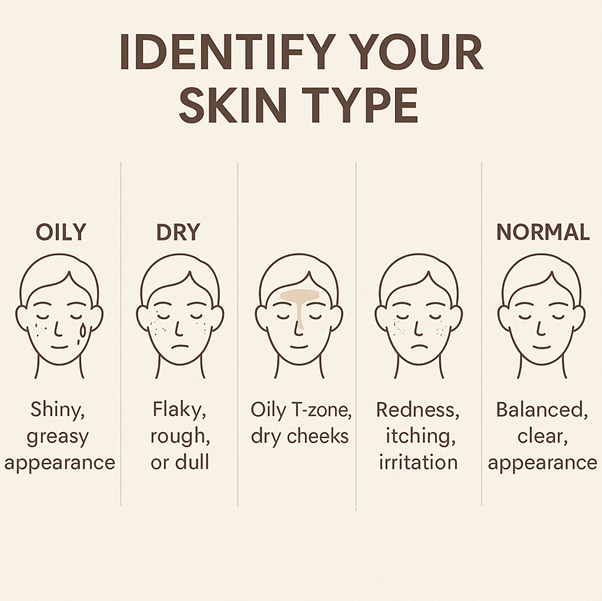
Your skin is unique, and so should your skincare routine be. Choosing the right skincare products tailored to your skin type isn’t just about achieving glowing skin—it’s about preventing long-term damage, breakouts, and sensitivity. Using the wrong formulation can clog pores, cause dryness, or even trigger irritation. Whether you have oily, dry, combination, sensitive, or normal skin, understanding what suits your skin is the foundation of a healthy skincare regimen.
How to Identify Your Skin Type: Look and Feel Test
Before building your skincare routine, it’s essential to know your skin type. Here’s a simple guide:
- Oily Skin: Appears shiny, especially in the T-zone (forehead, nose, chin). Feels greasy to the touch and is prone to blackheads and breakouts.
- Dry Skin: Feels tight, rough, or flaky. Often looks dull and may be sensitive in patches.
- Combination Skin: Oily in the T-zone but dry or normal on the cheeks. A mix of two skin types in different areas.
- Sensitive Skin: Easily irritated by skincare or environmental changes. Prone to redness, itching, burning, or stinging.
- Normal Skin: Well-balanced. Not too oily or dry. Smooth texture, minimal sensitivity or blemishes.
Pro Tip: After washing your face with a gentle cleanser, wait 30 minutes without applying anything. If your skin feels oily, you’re likely oily-skinned; if tight or flaky, it’s dry; if oily in parts, it’s combination; if it feels irritated or reacts quickly, you have sensitive skin.
Basic Skincare Routine for All Skin Types
Regardless of your skin type, a consistent skincare routine is non-negotiable. Here’s a dermatologist-approved daily regimen:
Morning Routine
- Cleanser: Choose one based on your skin type (see below).
- Antioxidant serum (optional but recommended): Helps fight free radicals and improve skin tone.
- Moisturizer: Keeps your skin barrier healthy.
- Broad-Spectrum Sunscreen (SPF 30 or above): Protects against UV rays, pigmentation, and premature aging.
Night Routine
- Cleanser or Double Cleanse: Remove dirt, oil, makeup, and sunscreen.
- Treatment Products: Based on skin concern – acne cream, retinol, pigmentation cream, etc.
- Night Cream or Moisturizer: Hydrates and supports overnight skin repair.
Choosing the Right Formulation Based on Skin Type
To get the best results from your skincare products, the texture and ingredients must suit your skin’s needs:
Moisturizers & Serums
- Oily Skin: Lightweight, non-comedogenic gels or water-based serums. Look for ingredients like niacinamide or salicylic acid.
- Dry Skin: Rich creams or emollients with hyaluronic acid, ceramides, and glycerin.
- Combination Skin: Balancing formulas—light lotions or gel-based moisturizers.
- Normal Skin: Light creams with minimal fragrance, suited for maintenance.
- Sensitive Skin: Fragrance-free, alcohol-free, and hypoallergenic creams.
Cleansers
- Oily Skin: Foaming or gel-based cleansers that remove excess oil without over-drying.
- Dry Skin: Creamy, non-foaming, soap-free cleansers that hydrate and soothe.
- Combination Skin: Gentle foaming cleansers to balance oil and dryness.
- Sensitive Skin: Mild, fragrance-free, non-soap cleansers with calming ingredients like chamomile or aloe vera.
Skincare That Works Starts with Knowing Your Skin
No two faces are the same—and your skincare shouldn’t be either. Choosing the right skincare products based on your skin type can transform your skin health. If you’re unsure about your skin type or need personalized guidance, a consultation with a dermatologist can help you build a custom routine that brings out the best in your skin.